

UK Visa Requirements for Nigerians: A Step-by-Step Guide


Send from


Exchange Rate
– – –
GBP 1 = NGN 2030.28232
Transfer Fee
Free – – – 0.99 0.99 USD
Receiver gets


Powered by Moka United
Delivered in minutes
If you’re planning a trip, studies or a move to Britain from Nigeria, you’re probably already searching things like “UK visa cost from Nigeria”, “how much is the UK visa fee in Nigeria”, “UK visa application requirements in Nigeria” or “how do I apply for a UK visa in Nigeria”. This step-by-step guide for 2025-2026 walks you through the process from start to finish, so you know what to do first, next and last.
Table of contents
- UK study visa requirements for international students 2025-2026
- Biometrics visa appointments and processing times for Nigerian applicants
Step 1: Choose the right UK visa type

Before you touch the online form, be clear on why you’re travelling to the UK. Your reason for travel decides the rules you follow, the documents you need and how much you pay in fees. Common routes from Nigeria include:
- Short visits – tourism, seeing friends and family, short business trips or meetings
- Study – short courses, foundation programmes or full degree courses at UK schools, colleges or universities
- Work – skilled worker roles, temporary work, health and care roles and some charity or religious work
- Family routes – joining a partner, parent or child who is already in the UK, or coming to look after a child
Take a few minutes to read the official guidance for your visa type on the UK government website. It helps you avoid choosing the wrong route and risking a refusal.
Step 2: Prepare your information and documents
Next, get your key details and evidence ready before you start the form. You’ll usually need:
- A valid Nigerian passport with enough blank pages and time left before expiry
- Your travel dates and a rough plan of where you’ll stay in the UK (hotel booking, invitation letter or tenancy agreement, depending on your route)
- Proof you can pay for your trip and living costs – recent bank statements, salary slips, business income records or sponsor letters
- Extra documents based on your visa type – for example a Confirmation of Acceptance for Studies (CAS) from a UK university, a job offer or certificate of sponsorship, or a marriage or birth certificate for family visas
Having everything ready makes the online form quicker and reduces the risk of mistakes that can slow down your application or lead to extra questions.
Step 3: Complete the online UK visa application
When your documents are ready, you create an online account on the official UK visa website, choose Nigeria as your country of application and select your visa type. You then fill in the form with your personal details, travel history, UK plans and background information.
Answer every question honestly and double-check spellings of names, dates and passport numbers. The details on your form must match your passport and supporting documents exactly, or you could face delays or even a refusal.
Step 4: Book biometrics and submit your documents
After you’ve completed the form and paid the visa fee online, you’ll be directed to book a biometrics appointment at a UK visa application centre in Nigeria. At your appointment you usually:
- have your fingerprints and photograph taken
- submit your passport for the visa decision
- upload or hand in your supporting documents, depending on the document submission service you choose
Once your biometrics are done and your documents are in, you wait for a decision. Processing times can change during the year, especially around summer holidays and the autumn university intake, so apply as early as the rules allow.

The full guide to UK visitor visas breaks down the Standard Visitor Visa rules in a clear, step-by-step way. It sets out the official Home Office fee structure from July 2025, explains who is eligible, what you can and can’t do as a visitor, and which documents Nigerian applicants usually need to provide.
You’re taken through the whole application journey-from completing the online form to attending your biometrics appointment, submitting your documents and understanding typical processing times. The guide also covers common reasons for refusals and explains how the Standard Visitor Visa differs from the new Electronic Travel Authorisation (ETA) system, stressing that if you’re from a country like Nigeria, India, Pakistan or China, you must still apply for a UK visitor visa rather than an ETA.
- The guide focuses on education, not selling services. It relies on official GOV.UK and Home Office sources and shares practical, realistic tips to help you prepare a stronger application.
Before you start your application, it helps to be clear on the UK visa cost from Nigeria and the UK visa fee in Nigeria for your exact route. You pay UK visa fees online in US dollars, but the amounts are based on a Home Office tariff set in pounds. That means the naira amount you finally see depends on the exchange rate your bank or card provider uses on the day you pay.
Typical UK visa fees from Nigeria (2025-2026)

Here’s a simple overview of the main visas most applicants in Nigeria choose. These are typical fee bands based on the current UK structure and can change when the Home Office reviews prices, usually once a year.
- Standard Visitor visa (up to 6 months) – usually around £115. This covers most tourist trips, short family visits and many business visits.
- Long-term Visitor visas – higher fees, depending on how long you want your visa to last:
- 2‑year visitor visa – often in the £400-£420 range.
- 5‑year visitor visa – often in the £750-£800 range.
- 10‑year visitor visa – often just over £1,000.
- Student visa – typically £480-£500 when you apply from outside the UK.
- Skilled Worker and other work visas – fees are higher and depend on the job type, your salary and the length of your sponsorship. For most work routes, you also need to budget for the immigration health surcharge.
- Family, spouse and partner visas – usually significantly more expensive than visitor visas, and you pay separate fees if your children apply as dependants.
These core visa fees do not include extra services such as priority processing, super priority processing or assisted document checking at the visa application centres in Lagos or Abuja. If you choose any of these add-ons, you pay them on top of the main visa fee during the same online checkout, before you go for biometrics.
What affects how much you actually pay in Nigeria?
When you calculate “how much is a visa from Nigeria to the UK” in naira, a few things can change the final figure you see on your bank statement.
- Exchange rate – the official fee is set in pounds, but you pay in US dollars. Your bank or card provider converts this to naira using their own rate on the day, so the exact amount can move up or down.
- Card and bank charges – some Nigerian banks and virtual dollar card providers add FX mark-ups or international payment fees. Check with your bank first so you know what to expect.
- Repeat applications – if your application is refused and you decide to try again, you pay the full visa fee each time you submit a new application.
When you complete the online UK visa form, you’ll see the exact fee for your visa type before you confirm and pay. That gives you a chance to review the amount in dollars, check your card limits and make sure you’re comfortable with the cost before you move on.
UK visa application requirements in Nigeria for different visa types start with knowing exactly what documents you need for your chosen route. Once you’re clear on this, the rest of your application usually feels much simpler-whether you’re focused on the UK visa cost from Nigeria, how much the UK visa fee is in Nigeria, or how to apply from Lagos, Abuja or anywhere else.
Core documents most Nigerian applicants must provide

Whichever visa you choose-visitor, study, work or family-there’s a core set of documents you usually need to upload and then take to your biometrics appointment in Nigeria.
- Valid Nigerian passport with at least 1 blank page and usually valid for the whole trip (or your full course, if you’re studying).
- Completed online visa application form and the printed confirmation sheet.
- Visa fee payment receipt-you must show proof that you’ve paid the UK visa fee from Nigeria, whatever route and amount you chose earlier.
- Biometrics confirmation showing your booked appointment at a visa application centre in Nigeria.
- Passport-style photos if requested (some applications reuse the digital photo taken at your biometrics appointment).
- Proof of funds-for example, bank statements, salary slips or business records-to show you can pay for your trip and won’t need public funds in the UK.
- Evidence you’ll leave the UK after your visit or visa period. This could include a job in Nigeria, family responsibilities, property documents or proof you run a business.
- Previous visas and travel history, if you have them in your old or current passports.
Extra UK visa application requirements in Nigeria by visa type
On top of the core documents, each UK visa type from Nigeria has its own extra requirements.
- Visitor visas: a clear travel plan, your accommodation details (hotel booking, Airbnb or staying with a host), and if someone in the UK is supporting you, their invitation letter and financial evidence.
- Study visas: Confirmation of Acceptance for Studies (CAS) from your UK school or university, proof you can cover tuition and living costs, your academic certificates and transcripts, plus a tuberculosis (TB) test certificate where required. We cover this in more detail in section 5.
- Work visas: a valid certificate of sponsorship from your UK employer, your signed employment contract and evidence that you meet the visa’s skill level and salary requirements.
- Family visas: proof of your relationship (such as a marriage certificate, birth certificate, photos and communication history), evidence that your relationship is genuine and ongoing, and the UK-based sponsor’s income, savings and accommodation details.
As you move into the next sections-especially when we walk through “how do I apply for UK visa in Nigeria” step by step-keep this checklist close. It helps you spot any missing documents long before your biometrics appointment, so you’re not rushing at the last minute.
UK study visa requirements for international students 2025-2026
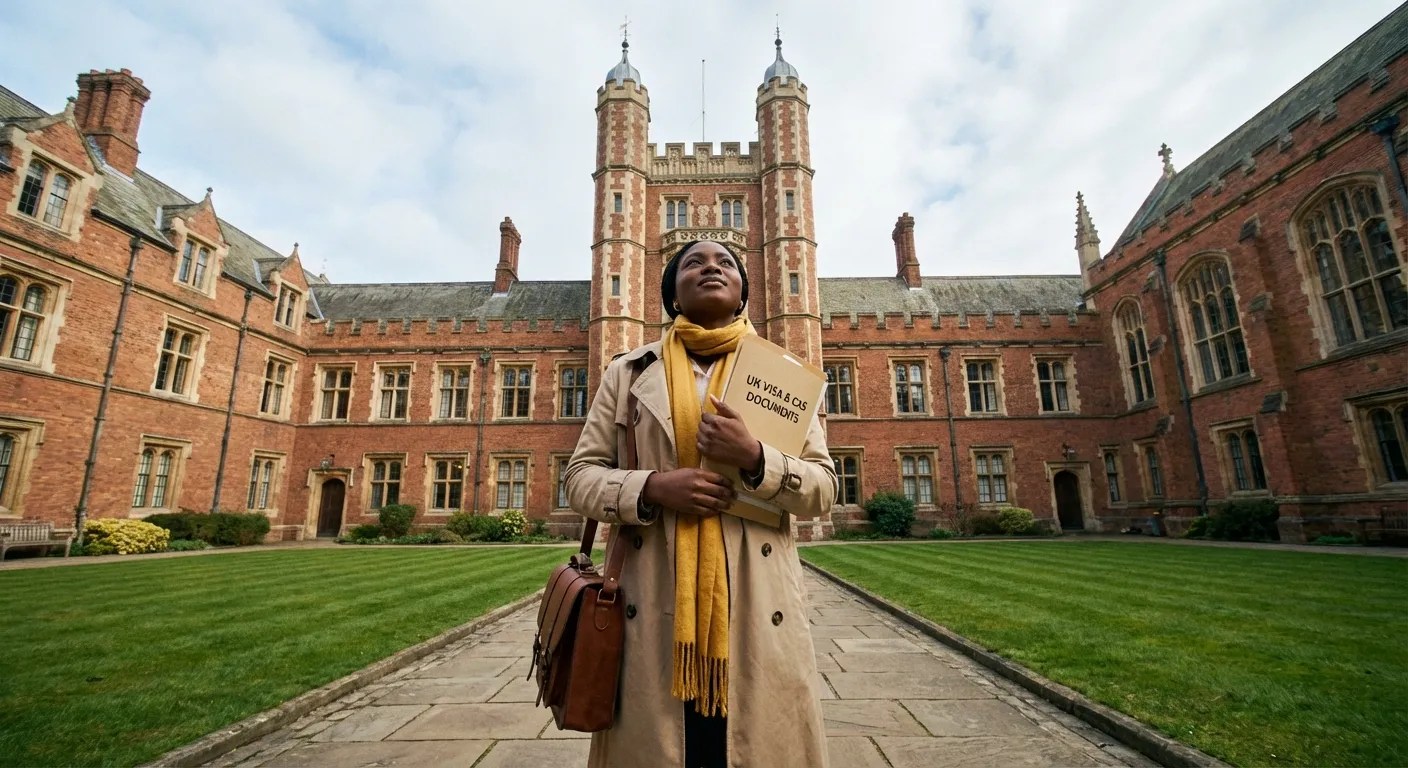
This guide walks you through the key UK study visa requirements for 2025-2026, step by step. You’ll find clear explanations of who’s eligible, which documents you need, how to show you have enough money, how to prove your English, what health checks to expect and how long the process usually takes.
In simple terms, the main UK study visa requirements include: a valid offer letter and Confirmation of Acceptance for Studies (CAS) from an approved education provider, proof of English language proficiency, evidence of sufficient funds to cover tuition fees and living costs, and a valid passport. The article also highlights other important conditions, plus the deadlines you should keep in mind if you’re applying from abroad.
The full article is designed to help you prepare a compliant and complete student visa application. It focuses on explaining the UK rules and common refusal reasons, rather than comparing or selling financial products. While it’s not written for one specific country, it’s especially helpful if you’re applying from Nigeria or another country and want a clear overview of how the UK study visa process works.
To start your UK visa application from Nigeria, you’ll use the official UK government online system. It’s the same starting point whether you’re checking the UK visa cost from Nigeria, looking up how much the UK visa fee is in Nigeria, reviewing UK visa application requirements in Nigeria, asking “how do I apply for UK visa in Nigeria?”, comparing how much a visa from Nigeria to the UK is, checking how much for UK visa in Nigeria, or preparing for UK visitor visa requirements from Nigeria, UK visiting visa requirements from Nigeria, UK visa requirements for Nigerian citizens, or a student or work visa. Everything begins in one central online place.
Step by step: start and complete your online form

- Create your online account
Choose the visa type you need (for example, visitor, study or work), then create a secure login with your email address and a password. Keep these details safe-you’ll use them to return to your form, track your application and download documents. - Answer the eligibility questions
Confirm where you’re applying from (Nigeria), your nationality and your reason for travelling to the UK. Your answers decide which application form you see next, so answer carefully and honestly. - Complete the main application form
Fill in your personal details, travel history, UK travel plans, family details and finances. Make sure everything matches your passport and supporting documents. If you say you’ll stay with a cousin in Manchester, for example, your cousin’s name and address should match your invitation letter and any other proof you provide. - Upload documents (if the system allows)
For some visa types, you can upload scans of your documents online before your biometrics appointment. Doing this in advance can make your visit to the visa application centre quicker and more straightforward.
Pay your visa fee and book biometrics online
- Pay the visa fee online
The system shows your exact visa fee in pounds (GBP). You can pay with a bank card that works for international online payments. If your Nigerian bank card does not always work for overseas payments, a UK-based option such as a virtual debit card can help you pay securely in GBP. - Book your biometrics appointment
After you pay, you’ll be redirected to book your biometrics. Choose a visa application centre in Nigeria, then pick a suitable date and time. You’ll receive a confirmation email-print it or save a clear copy on your phone, as you must show it when you attend. - Download and save your checklist
At the end of the process, the system generates a document checklist and a PDF copy of your completed form. Save and print these. They tell you exactly what to bring to your biometrics appointment and help you stay organised.
For a standard visitor visa, the UK visitor visa requirements from Nigeria focus on proving that you’re a genuine visitor who will return to Nigeria after your trip. The documents you provide are key to this-they can strongly support or seriously weaken your application.
Core eligibility requirements for Nigerian visitors

You’ll need to show that:
- you’ll leave the UK when your visit ends
- you can pay for your travel, accommodation and daily expenses without working in the UK or claiming public funds
- you have strong reasons to return to Nigeria (such as a job, business, studies, close family or property)
- you will only do activities allowed on a visitor visa-such as tourism, short business meetings or visiting family and friends
The UK Home Office looks at your documents as a whole, not one by one. Your story-why you’re travelling, how long you’ll stay and how you’ll pay for it-needs to be clear, consistent and backed up by evidence.
Documents you’ll usually provide from Nigeria
When you complete the online form, you’ll see a checklist of what to upload or bring to your visa appointment. For most Nigerian visitor visa applications, this usually includes:
- Current Nigerian passport with at least 1 blank page and valid for your trip dates.
- Previous passports, if you have them, to show your travel history (visits to Schengen countries, the US, UK and others can help).
- Visa application form confirmation and your visa appointment confirmation.
- Passport-sized photo if the system asks for one (some UK visa application centres use your biometric photo instead).
- Financial evidence for at least the last 6 months-personal bank statements, salary slips, business account statements or pension statements that match the figures you’ve put in your application form.
- Proof of employment or studies-a letter from your employer on letterheaded paper, or a letter from your university or polytechnic, confirming your role or course, start date, approved leave and expected return date.
- Business documents if you’re self-employed-Corporate Affairs Commission (CAC) documents, recent tax records and business bank statements.
- Proof of ties to Nigeria-for example a marriage certificate, children’s birth certificates, tenancy agreement, land documents or property ownership papers in your name.
- Travel plans-a simple travel itinerary and, if booked, flight and hotel reservations. You don’t have to pay for flights before a decision is made, but many applicants choose to hold or reserve tickets.
- Invitation letter if you’ll stay with family or friends-plus details of their UK immigration status, their UK address and proof they can host you (such as a recent council tax bill, utility bill or tenancy agreement).
The Home Office can ask for extra evidence if anything is unclear. If your documents are neat, accurate and match what you’ve said online, you make it much easier for a UK caseworker to approve your visit.
Biometrics visa appointments and processing times for Nigerian applicants

Biometrics and visa processing are where your UK visa application becomes real. By this stage you’ve already dealt with things like UK visa fees from Nigeria and visa requirements-now it’s about showing up, giving your fingerprints and waiting for a decision.
Booking and attending your biometrics appointment in Nigeria
After you submit your online form and pay the visa fee, you’ll be asked to book a biometrics appointment at a visa application centre in Nigeria.
- Where you go: most Nigerian applicants use centres in Lagos or Abuja. At times, Port Harcourt is also available-what you see when you book depends on which locations are open when you apply.
- What happens there: staff scan your fingerprints, take a digital photo and check your passport and appointment confirmation. For some visa routes, you’ll also submit your supporting documents if you haven’t uploaded them online.
- What to take: your current international passport, printed appointment confirmation, your application checklist and any original documents the system says you must bring.
- Timing: appointments can fill up quickly in busy periods-especially around UK university start dates, summer holidays and Christmas travel-so try to book a slot as soon as they appear.
Some centres offer extra, optional services-for example, appointments outside normal hours or help with scanning and uploading documents-for an additional local fee in naira, paid at the centre or online. These services don’t influence your visa decision. They simply make the process more convenient.
UK visa processing times for Nigerians in 2025-2026
Once you’ve given biometrics, your passport usually stays with the application centre while UK decision makers review your case.
- Standard processing: for most visitor and study visas, the UK Home Office currently aims to decide applications within about 3-6 weeks from your biometrics appointment. Work and family visas often take longer.
- Peak periods: during summer holidays and September university intakes, decisions for applications made in Nigeria can move towards the longer end of this range. It’s safer not to book non-refundable flights or accommodation until your visa is granted.
- Priority services: when available, paid priority or super priority services can speed things up to around 5 working days or even 24 hours from biometrics. These services are limited, cost extra and are not offered for every visa type.
You’ll usually get email updates as your application progresses. When a decision is made, you’ll be told when and where to collect your passport in Nigeria, or whether it will be returned to you by courier-depending on the option you chose when you applied.
Many Nigerian applications are refused for simple, avoidable reasons. By now, you already have a sense of the UK visa cost from Nigeria, the main UK visa application requirements in Nigeria and the basic process. The next step is to avoid the common mistakes that often lead to a refusal.
Top refusal reasons for Nigerian applicants

- Weak proof you will return to Nigeria
Your ties to Nigeria need to be clear and believable. An entry clearance officer (ECO) looks for things like stable employment, an active business, close family, property or ongoing studies. Vague employment letters, no recent payslips or no evidence that your business is genuine often raise doubts about whether you will come back after your trip. - Unclear or unbelievable finances
The ECO checks whether the money in your account makes sense for your situation. Large, unexplained deposits, bank statements that do not match your stated income or sponsors who cannot show enough clean, traceable funds are all common refusal reasons. Money that appears just before you apply, with no clear source, is a major red flag. - Inconsistent or incomplete documents
Every detail needs to match-names, dates of birth, salaries, travel dates and accommodation. Missing pages in your bank statements or a Confirmation of Acceptance for Studies (CAS) that does not match your course details can quickly lead to a refusal. Even small errors can make an ECO doubt the reliability of your application. - Poorly explained travel purpose
If you simply say you are “visiting the UK” without a clear plan, your application looks weak. The ECO wants to see a short, realistic itinerary that fits your circumstances-for example, attending a specific graduation, visiting close family in Manchester or taking a 10‑day holiday in London with confirmed accommodation. - Previous immigration or visa issues
Past overstays, visa refusals in the UK or elsewhere, or giving false information are serious matters. Hiding them makes things worse and can lead to a long ban from the UK. The Home Office shares data with many countries, so it is safer to be open and explain what happened.
How to avoid a refusal and strengthen your application
- Tell a consistent story
Make sure your online form, supporting documents and any cover letter all say the same thing. If your plans have changed since you first considered applying, explain this clearly so the ECO understands why. - Show genuine ties to Nigeria
Back up your ties with evidence-employment letters and payslips, business registration and tax records, marriage and birth certificates for close family, property documents or proof of ongoing studies. The stronger your links to Nigeria, the more confident an ECO can be that you will return. - Make your finances make sense
Provide a clear, stable financial picture. This usually means regular income, a sensible savings pattern over several months and realistic costs for your trip or studies. If you have a sponsor, show their income, savings and relationship to you, and explain why they are supporting you. - Be honest about your history
Declare all previous visas, refusals and travel history. If there were problems in the past, address them briefly and directly. A short, clear explanation is far better than leaving gaps that the ECO has to guess about. - Only include relevant documents
More paper does not always mean a stronger case. Focus on documents that directly support your purpose of travel, your finances and your ties to Nigeria. Unrelated or confusing paperwork can distract from the important points.
If your visa is refused, read the refusal letter carefully. It sets out the exact reasons the ECO said no. Use those points as a checklist so you can address each one before you apply again from Nigeria.


Popular articles





Invite friends to TransferGo, earn £20