

Ghanaian community in the UK


Send from


Exchange Rate
– – –
GBP 1 = NGN 2030.28232
Transfer Fee
Free – – – 0.99 0.99 USD
Receiver gets


Powered by Moka United
Delivered in minutes
Moving to the UK from Ghana: your first weeks
When you move to the UK from Ghana, your first days can feel exciting and overwhelming at the same time. Many Ghanaians in the UK describe it as a mix of “wow” and “where do I start?”. The weather is cooler, people queue for almost everything and the pace-especially in big cities like London, Birmingham or Manchester-can feel fast.
You’ll probably notice the Ghanaian community in the UK quite quickly, particularly if you arrive in areas with a strong London Ghanaian community or in cities like Reading, Milton Keynes and Bristol. Seeing Ghanaian food shops, Afro-Caribbean supermarkets, salons and churches can be a big comfort. Still, it can take a while before you feel fully at home.
In your first weeks, expect a lot of practical jobs: registering with a GP (doctor), opening a bank account, checking the conditions of your UK visa and working out public transport. Oyster cards in London, contactless payments and buses that aim to run on time might all be new at first, but you’ll soon get used to them.
Emotionally, settling in the UK from Ghana often means dealing with homesickness, darker winters and a slightly different style of English and accents. The good news? Life in the UK for Ghanaians usually feels much easier once you’ve found your local Ghanaian churches, community groups, social media forums and a daily routine that works for you.
Table of contents
- Understanding identity in the UK Ghanaian diaspora
- Ghana Community Bristol: local support network for Ghanaians in the UK
- Where the Ghanaian community in the UK is based and how to find your people
- Ghanaian churches in the UK and why they are at the heart of community life
- Jobs in the UK for Ghanaians and building a career while settling in
- Cost of living in the UK for Ghanaians and managing your money wisely
- Life in the UK for Ghanaians: looking beyond your immediate community
Understanding identity in the UK Ghanaian diaspora

This piece dives into what it means to be both Ghanaian and British when you live in the UK. It looks at the everyday reality for UK-born Ghanaians and the wider Ghanaian community here, focusing on upbringing, language, cultural exposure and where you feel you belong.
Through honest reflections and interviews, the article shows how church life, family stories, food, music and trips to Ghana (or not going at all) all shape identity. One interviewee explains that “it wasn’t until I went to university that I started to see myself as part of the Ghanaian diaspora and part of a larger ecosystem instead of a Ghanaian living in London with other Londoners.”
As you’ll see in the full article, it offers a clear, relatable look at how Ghanaians in the UK navigate dual identities. It’s especially useful if you’re a new arrival and want to understand existing communities, social dynamics and where you might fit in.
- Explores how UK-born Ghanaians experience culture through church, family and local community events across cities like London, Birmingham and Manchester.
- Talks openly about language loss, trips to Ghana and the feeling of being “too British” or “not Ghanaian enough”.
- Shares practical ways people plan to pass on Ghanaian heritage, values and traditions to the next generation in the UK.
Ghana Community Bristol: local support network for Ghanaians in the UK
Ghana Community Bristol is a welcoming network of Ghanaians and friends of Ghana living in and around Bristol. It focuses on cultural exchange, practical support and the overall wellbeing of its members.
- It promotes Ghanaian culture across Bristol and the wider South West through social gatherings, community events and educational activities-from cultural festivals to talks at local community centres.
- It supports members’ social and economic wellbeing by signposting services, sharing local information and offering a community to lean on during life’s big moments, from settling into a new job to navigating life in a new city.
- It offers resources and solidarity in times of need, helping members connect with the right local organisations in Bristol and across the UK when they need extra support.
- It works closely with similar organisations and builds links that benefit both Ghanaian and British communities, making it a helpful first stop for new Ghanaian migrants looking for local connections and trusted information.
You can read more about the group and its activities on the Ghana Community Bristol profile on African Voices Forum.
Where the Ghanaian community in the UK is based and how to find your people
When you move to the UK from Ghana, it really helps to know where Ghanaians are already settled. The largest Ghanaian community in the UK is in London, especially areas like Tottenham, Peckham, Croydon, Woolwich and Thamesmead. In these neighbourhoods, you’ll find Ghanaian shops, salons, food stores and social clubs that make life in the UK feel more familiar.
Outside the capital, there are growing communities in Milton Keynes, Reading, Luton, Birmingham, Manchester and Leeds, plus Bristol, which we looked at earlier. Many of these places have active associations, weekend schools and Ghanaian churches in local neighbourhoods-perfect when you’re settling in the UK from Ghana and want to build strong friendship networks.
To find your people:
- Follow the food – search locally for Ghanaian or West African restaurants, takeaways and supermarkets. In London, for example, you’ll often find these on busy high streets near major bus routes.
- Look for events – independence day parties, Azonto nights, church conventions and community picnics are often shared on social media and Eventbrite.
- Join online groups – Facebook and WhatsApp groups for Ghanaians in the UK, or in specific cities, are very active and a good place to ask questions.
- Ask at work or college – colleagues, classmates and tutors may know local groups, jobs in the UK for Ghanaians, or churches and associations you can try.
Over time, these everyday connections can turn a new city into a genuine home from home.
Ghanaian churches in the UK and why they are at the heart of community life
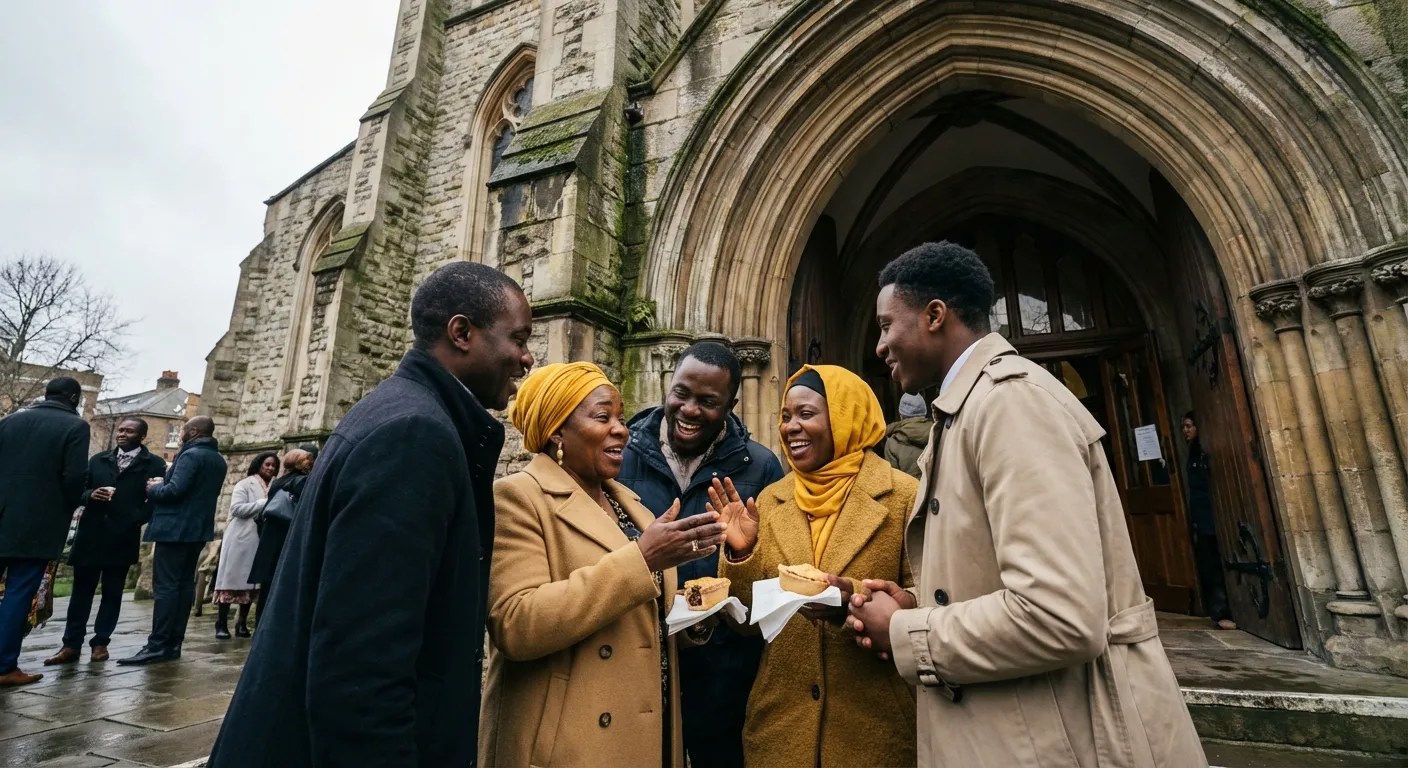
For many Ghanaians in the UK, church is the first real “home base” after you move from Ghana. Before you fully understand the cost of living in the UK or find stable work, a church can give you people, structure and support.
Ghanaian churches in cities like London, Birmingham, Manchester and Milton Keynes are far more than Sunday services. They’re places where you can hear Twi, Ga, Ewe or Fante, sing familiar worship songs and share jollof, waakye or meat pies after church. For a lot of people, this is when life in the UK starts to feel less lonely and more like home.
Most congregations run midweek prayer meetings, youth groups, choir practice, and women’s and men’s fellowships. These are natural spaces to swap tips on jobs, school admissions, housing or what to expect when you’re renewing a UK visa. You’ll often hear people share their own experiences-what worked, what didn’t and who to speak to next.
Churches also help with the practical side of settling in the UK from Ghana: lifts to appointments, translation support, second-hand furniture and introductions to trusted landlords or employers. In areas with a large Ghanaian community-especially in parts of south London, north London and Milton Keynes-churches often organise summer barbecues, cultural nights and Ghana Independence Day celebrations. These are ideal moments to make friends beyond your own family or ethnic group and feel part of the wider Ghanaian community in the UK.
Jobs in the UK for Ghanaians and building a career while settling in
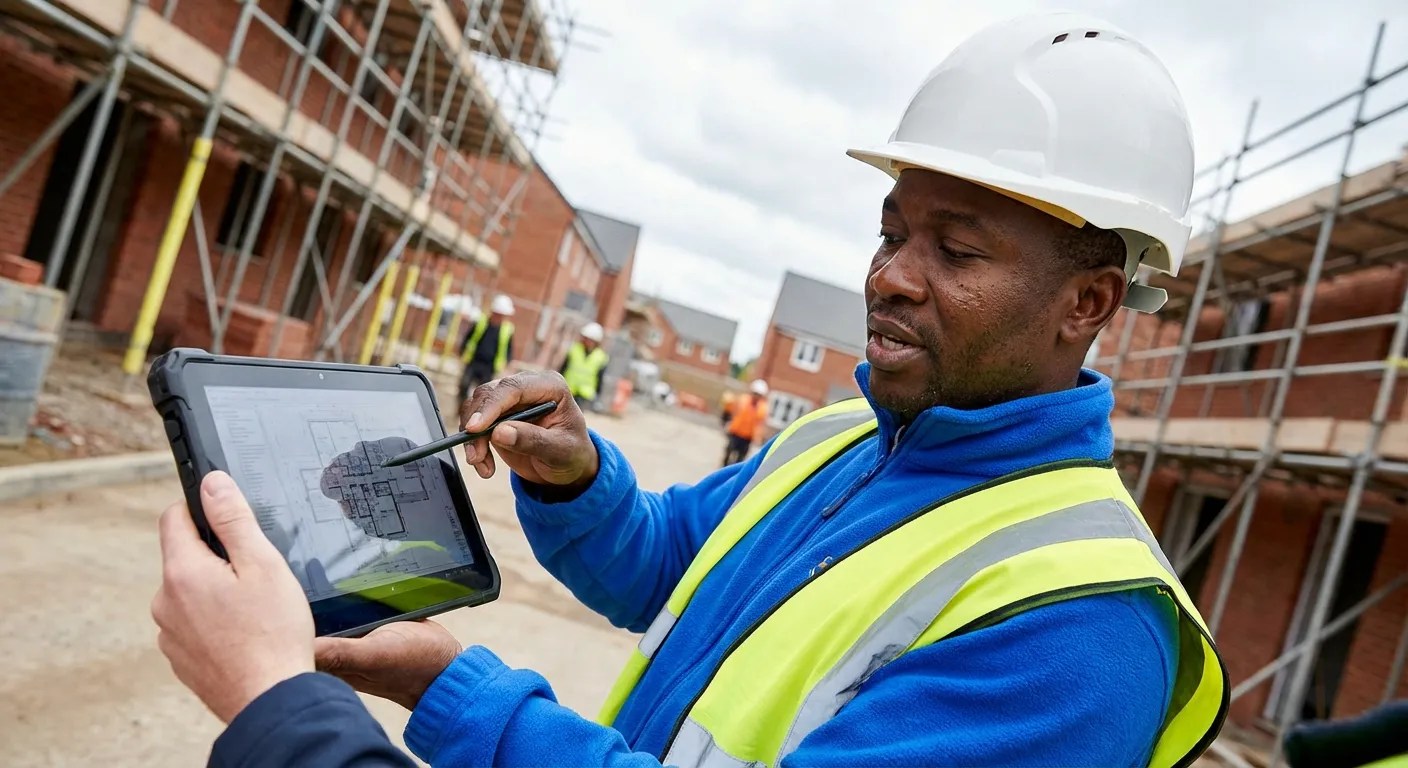
When you move to the UK from Ghana, finding work is usually your first big priority. Many Ghanaians start with practical, entry-level roles while they get used to the system, then gradually build towards a long-term career. Common first jobs include care work, hospitality, warehouse roles, cleaning, retail and security-especially in big cities like London, Birmingham and Manchester, where the Ghanaian community is already well established.
To work legally, your UK visa conditions must allow employment, so always check how many hours you can work and what type of work is allowed. If you have qualifications from Ghana, you might need them recognised or assessed for the UK. Sectors such as health and social care, construction, IT, finance and nursing all offer strong career paths, particularly if you’re open to studying or retraining while you settle.
The Ghanaian community in the UK can be a great support. Church announcements, WhatsApp groups, community associations and local Ghanaian restaurants or shops often share job leads and recommendations. At the same time, try to network beyond Ghanaian circles-speak to colleagues, attend local job fairs at places like Jobcentre Plus or community centres and ask about training or apprenticeships at work. This balance helps life in the UK grow from “just a job” into a stable career, while you’re still getting used to the cost of living and planning your future between the UK and Ghana.
Cost of living in the UK for Ghanaians and managing your money wisely

When you move to the UK from Ghana, prices can be a real shock. Many Ghanaians say the cost of living UK Ghana comparison hits hardest when you pay your first month’s rent or do your first big food shop. Understanding this early makes settling in the UK from Ghana much easier and helps you enjoy life here instead of worrying about every pound.
Know your main monthly costs
- Rent and bills – London is usually the most expensive, especially areas with a large London Ghanaian community such as Peckham, Tottenham or Croydon. Sharing a house or flat is normal in the UK and can cut your costs a lot.
- Travel – In London, use an Oyster or contactless card and check daily and weekly caps on the Transport for London website. Outside London, look at local bus passes, railcards or season tickets if you travel regularly.
- Food – Big UK supermarkets like Tesco, Asda, Aldi, Lidl, Sainsbury’s and Morrisons are often cheaper than small corner shops. For Ghanaian ingredients, try African or Caribbean food stores, especially in areas with Ghanaian communities, but compare prices and buy in bulk when it makes sense.
Simple ways to manage your money
- Make a basic budget: write down your income, then your fixed costs (rent, council tax, utility bills, phone, travel) before you plan extras.
- Cook at home most of the time – regular takeaways or eating out in the UK can quickly eat into your money.
- Be careful with credit cards, overdrafts and loans – interest rates can be high, and missed payments affect your UK credit score.
- When you send money home, always check the fees and exchange rate so more of your money reaches your family instead of being lost in hidden costs.
When you manage your money well, life in the UK for Ghanaians feels more stable. You can focus on work, studies and building your future, instead of stressing about every bill.
Life in the UK for Ghanaians: looking beyond your immediate community
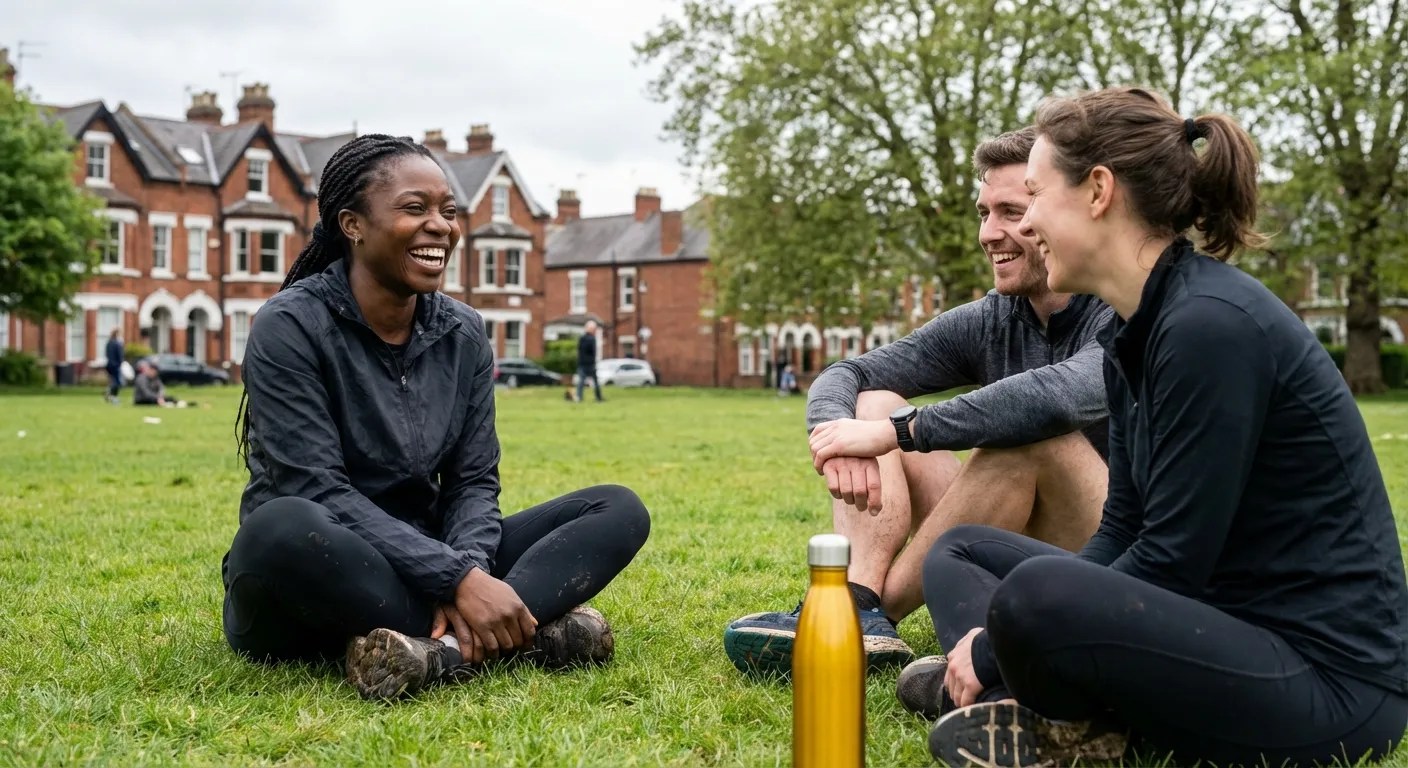
When you move to the UK from Ghana, it is natural to look first for other Ghanaians. As you start to feel settled, it helps to slowly widen your circle so life in the UK is not limited to just work, home and church.
Everyday ways to mix with wider British society
Joining local activities is one of the easiest ways to meet people outside the Ghanaian community in the UK. You could try:
- local football or netball teams
- gym classes, running clubs or walking groups
- evening courses at your local college or community centre
- parent-teacher events if you have children in school
- volunteering at local charities or community projects
These spaces give you natural conversation starters and help you get used to British humour, small talk and local culture-from chatting about the weather to talking about the latest Premier League results.
Staying proudly Ghanaian while opening new doors
You do not have to hide who you are to fit in. Many people respect confidence in your roots-whether that is wearing kente to a special event or sharing waakye at an office bring-and-share lunch. Stories like Emmanuel Frimpong’s Ghana-UK football journey show how you can embrace both sides of your identity and feel at home in both places.
Building a long-term home
Over time, friendships from work, hobbies and your neighbourhood will sit alongside your London Ghanaian community, Ghanaian churches in the UK and family ties back home. That mix-strong Ghanaian roots and wider British connections-can make settling in the UK from Ghana feel truly complete and give you support in every part of your life.


Popular articles



Invite friends to TransferGo, earn £20